λ | literal error |
meaning and experience
No matter who speaks them, the words of Man are not the Words of God; Tao called Tao is not Tao; the map is not the territory, words are not the things they represent. Yet everywhere, the belief that words can enchain the ineffable is still exploited to justify the exercise of power.
Whether in churches, temples, universities, or mosques, literalism coextends with fundamentalism. Matters of meaning remain, distinct from the temporal struggles of biology, whatever chemistry life first stepped through, and extend beyond any boundaries of conception or death.
As literal interpretations became grammar and laws, SCRIPTURE cloaked the universe and annexed dreams of a heaven on Earth. Nations were drawn around feudal states not through enlightenment but by force. Wars crippled their hopes and in their ruin a new faith took root, SCIENTISM.
Science is simple and disengaged. It has no place for faith. Neither human nor divine, faith only corrupts it.
Literal and metaphorical frames of reference express concrete and abstract descriptions — the body, the mind, and the soul, for instance. A statement is simply a perspective on the whole; incomplete and partial. Words and concepts are not innately twinned, opposites are not necessarily contradictory or conflicting — the mind does not exist yet obviously it does, colour does not exist and yet obviously it does.
It is inevitable that different frames of reference arise from the separation intrinsic to individual awareness. For meaning to be shared common ones are negotiated; however, they are routinely muddled to establish category-mistakes as by fragmenting meaning these bypass reason, appealing to emotions to validate rhetoric and establish beliefs that factionalize opinion and neutralize debate.
Words are just noise or marks on a page, their only meaning that which we give them. Personal and ambiguous, they are labels for those things in our perception that we found important in the frame of expression which imprinted our ontogeny. As 'native', phrasal languages are displaces by literacy, they become more powerful, both in societies and in individuals. Increasingly seen as the things they represent, while their storylines guide us those less literate are rendered dumb and powerless, disorientated as SCRIPTURES replace wisdom.
Communication is primitive and fundamental. In the primordial soup some wriggling thing unknowingly spoke, and in some manner its environment replied. Each BEING, simply by engaging with its environment, communicates with others, however unconnected they might seem, and irrespective of whether they understand what may be meant or not each in their way responds. In the beginning was the word, just not one we recognize.
Life needs AWARENESS to make the choices needed to survive — how else could it be; only this essential singularity sets its BEINGS apart. Bootstrapped from inherited codes, BEINGS use prior experience to assess their current SENSATIONS, converting whatever they can recognize into the measurements of significance that inform their choices.
The map is not the territory; words are not the things they represent. Literalism muddles frames of meaning, prejudicing understanding and misdirecting choice. There may be an epidemic in our minds and one in our souls, but even if so they would not be the same.
With a foreign tongue I can barely speak but even in silence language is inescapable. This is not madness. Asleep or awake our brains reflect on the information our senses provide, integrating our experience into an internal model that anticipates future-space, and testing this through thought and conversation.
It is not necessary to ask whether soul and body are one, just as it is not necessary to ask whether the wax and its shape are one, nor generally whether the matter of each thing and that of which it is the matter are one. For even if one and being are spoken of in several ways, what is properly so spoken of is the actuality. Aristotle, 350 BC
See also here: Biophysical Nature.
soul and emotion
It then seems reasonable that the pre-Christian concept of an animating force (a breath or spirit) be translated as the meta-biological construct, biosemiosis.
It is as correct, as it is incorrect, to say that hormones create love, as to say that love creates hormones.
complementarity
Niels Bohr, who received the Nobel Prize for his foundational work on Quantum theory, conceived the Principle of Complementarity —that singular items could at the same time possess apparently mutually exclusive properties— after realizing that light behaved like both waves and particles. His motto became: "Contraria non contradictoria sed complementa sunt", meaning: contradictions are not contradictory but complimentary.
On words and meaning, he wrote:
phrasal language
Languages we use to communicate with are not acquired through learning letters and grammars. Individual expression is acquired through the repeated use of increasingly lengthy and complex word-blocks —of words then phrases, sentences, and paragraphs— learning the concepts and laws of a language through real, and virtual, social interaction.
While 'primitive' peoples even today are still able to express themselves routinely and seamlessly in more than half a dozen languages, with the establishment of nation states it has become normal for the majority of a people to speak only the official language of the state that they reside in.
As the translators of the Tao Te Ching [1] explain — referring to their translation of the six, symmetric characters it opens with as "Tao called Tao is not Tao" — translations are necessarily approximations, incapable of fully reflecting each others' unique heritage and nuancing. Korzybski[2] specifies the fundamental issue — "The map is not the territory." "Words are not the things they represent." — When translations from one terrestrial language to another are unavoidably approximate, and language ambiguous, how much more so is any translation of a deity's 'language' — the utterances of infants more precisely approximate those of adults than the words of Man do the Words of God.
FUNDAMENTALISM here carries a belief-neutral definition; the combination of a rigid adherence to a point of view characterized by fundamental principles and an aggressive intolerance of other views.
words and maps
In the paper 'A Non-Aristotlean System and its Necessity for Rigour in Mathematics and Physics', presented to the American Mathematical Society in 1931, Alfred Korzybski made two observations: 'A map is not the territory', and 'Words are not the things they represent' (here highlighted in bold; italic emphases by the author).
inclosure
During the Middle Ages — the 5th to 12th centuries — and later, the Latin word feudum was used to refer to freehold property. Only in the 17th century was the term feudalism coined by historians to create an historical narrative for European nation states.
Since the Middle Ages, local lords had expanded the territories subject to them, and intensified their control over the peoples living there. In the 17th century the Inclosure Acts began, creating property rights over land that previously had been held in common. In England and Wales, between 1604 and 1914 over 5,200 such Acts enclosed around 28,000 km2 of open fields and common land. Tenants and their descendants were evicted. Displaced from the countryside they were forced to look for employment in cities and factories. The poem: The Goose and the Common, by an unknown 18th century writer, protests the injustice:
They hang the man and flog the woman Who steals the goose from off the common Yet let the greater villain loose That steals the common from the goose. The law demands that we atone When we take things we do not own But leaves the lords and ladies fine Who take things that are yours and mine. The poor and wretched don't escape If they conspire the law to break This must be so but they endure Those who conspire to make the law. The law locks up the man or woman Who steals the goose from off the common And geese will still a common lack Till they go and steal it back.
For the history of the Inclosure Acts in the UK see e.g: Enclosing the Land, published on the British Government website, and: Inclosure Acts, on Wikipedia.
The total land area of England and Wales is approximately 151,000 km2. The Inclosed land represented nearly 20% of the total land area of the combined countries.
reconciling difference
Societies are founded on the reconciliation of differences. Winning the peace is a contradiction in terms; war just increases social entropy, turning back the clock, extinguishing evolved social knowledge, and regressing society to a more primitive state.
Wars are colonial endeavours to replace social forms; those fought by colonialists to establish themselves in other countries, for instance, or by established interests to exploit industrialization or virtualization. Destruction is their common goal.
Leaving the majority stripped of rights, wars recycle their assets, converting them into investments for those with power. The advice, attributed to Baron Rothschild, "When there's blood on the streets, buy property", only applies to those with the power to retain their assets.
biophysicality
If we accept as unavoidabe that all descriptions of the ineffable are metaphorical; and if creationist and anthropocentric teleologies and their concepts of the soul are set aside; then, BEINGS can be defined as 'vehicles' of life and LIFE inferred recursively.
Rather than merely 'wet' physical entities, BEINGS are BIOPHYSICAL EXPRESSIONS, organized and animated by the interpretations their BIOSEMIOTIC systems make of their external and internal environments.
Any psychological construct requires a BIOPHYSICAL correlate in order to exist; every BIOPHYSICAL construct requires a psychological correlate in order to survive. In actuality then, psychology refers to the METABIOLOGICAL expression of a BEING.
PERCEPTIONS, attributes of BIOSEMIOTIC systems that in humans are considered as awareness, consciousness, EGO and mind, are generated from information that the SENSES of a BEING recognize in the NOUMENA which it encounters — in the same way as PERCEPTIONS of colour are.
wellness
In an individual, the development of wellness and illness is a function of the interaction between their BIOPHYSICAL actuality and their environment. It is this system as a whole that is impacted by any medical or psychological interventions, and any social support and care, that the individual receives or is privated of.
Research into cancer and other diseases has long since identified the existence and primacy of METABIOPHYSICAL systems, and the need to address these as a whole; however, despite the work of the WHO modern societies and their BROADCASTING systems appear obdurate, discounting 'holism' and instead promoting increasingly reductionist models.
MEANING, refers to that which a BEING PERCEIVES from the EXPRESSION of a NOUMENON. This then is inherited, encoded and developed through the FRAME of the individual's ONTOGENY. It is inevitable then that different FRAMES arise.
Those BEINGS that are less able to recognize and reconcile these different FRAMES are then at greater risk in social groups of being misinformed or deceived.
Ultimately, short term success is an insufficient guide for future action. Locusts are successful but find themselves unable to escape developing from peaceful co-existance, as individuals into cannibalistic war, as a swarm.
BIOSEMIOSIS is a recursive process, enabling BEINGS to generate MEANING by aligning their PERCEPTION of their current EXPERIENCE with what they can RECOGNIZE from the EXPERIENCES previously EMBODIED in themselves, or externally, by themselves or through inheritance. ENDOSEMIOSIS and EXOSEMIOSIS then refer, respectively, to the RECOGNITION of internal and external NOUMENA..
BIOSEMIOSIS is a recursive process, enabling BEINGS to generate MEANING by aligning their PERCEPTION of their current EXPERIENCE with what they can RECOGNIZE from the EXPERIENCES previously EMBODIED in themselves, or externally, by themselves or through inheritance. ENDOSEMIOSIS and EXOSEMIOSIS then refer, respectively, to the RECOGNITION of internal and external NOUMENA..
A metatransition is a metasystem transition to EITHER a more complex OR a simpler structure, ultimately leading to a transitory OR a permanent evolutionary transition in individuality.
Here, metasystem refers to a general, rather than to a restricted, controlling or organizational system which maintains the homeostasis necessary for the functioning of a system and its subsystems.
functioning, disability and health
First drafted by the WHO in 1980, the International Classification of Functioning (the International Classification of Functioning, Disability and Health), is an holistic overview of wellness and illness. Despite its publication, and the fact that today biopsychosocial models are taught in medical schools, the significance and impact on social organization and its institutions of these models might appear to citizens to have been relatively minimal — perhaps because of the powerful lobbies that work to promote a fundamentalist belief in scientific reductionism.
The article, from which the quote was taken, although apparently accessible in 2024, has now been taken down by Stanford Medicine. The new article (at Stanford research builds link between sleep, cancer progression) still refers to Spiegal's work, but the expurgated quote there now, intentionally or otherwise, seems to downplay the research and to distance Stanford from Spiegal and the view he expressed.
life
Life is the state of being.
Being is the condition of BEINGS.
A BEING is descended from a BEING.
I am a BEING.
It is as correct or incorrect to say that hormones create love as it is to say that love creates hormones. Love is not definable in the way that hormones are; they are terms in different reference frames.
Noumenon, is a Greek word meaning "that which is perceived". It is the word Kant used to identify the thing-in-itself, the underlying reality that is then recognized by an observer as a SIGN.
Kant referred to recognition of the thing-in-itself as perception. Here however, PERCEPTION is used to label one of the four stages in the process of BIOSEMIOSIS that is bootstrapped by RECOGNITION.
Ruppert, Edward E.; Fox, Richard, S.; Barnes, Robert D. (2004). Invertebrate Zoology, 7th edition. Cengage Learning. pp. 148-174; cited in Jellyfish, Taxonomy (list item: Staurozoa), Wikipedia..
Fautin, Daphne G. and Sandra L. Romano. 1997. Cnidaria. Sea anemones, corals, jellyfish, sea pens, hydra. Version 24 April 1997. http://tolweb.org/Cnidaria/2461/1997.04.24 in The Tree of Life Web Project, http://tolweb.org/.
footnotes of n_Einstein_Translation.php included in entryNote.php, e_Einstein_HumanDelusion.php, and e_personalMeta.php.
Einstein wrote the above (bold emphasis added), in ink, in a note now held in the Albert Einstein Archives, Jerusalem. The edit I have made is of the translation, written in another hand, that appears underneath them.
There were several reasons for editing that translation — to reflect the gender neutrality of the German more consistently; to echo Einstein's use of the words, delusion, and, illusion; and to better reflect the certitude of the note's opening argument, carried in the brevity of the German yet somehow absent in the translation on the note itself. In the end, the edit below, supported by translations by Google on 6 March 2024, is only a minor edit of it:
The translation, in pencil on the original note, became the text of the condolence letter sent from Einstein to Dr. Marcus on 12 February 1950. The first two sentences of it were then used to open the letter of condolence sent on the 4 March 1950 to Norman Salt.
delusions and illusions
Einstein spoke the refined German of the Bildungsbürgertum, a language characterized by its precision. It might the be reasonable to assume, as an inspection of Einstein's note also suggests, that his use of the word Täuschung (delusion) twice and Illusion once, was considered not careless.
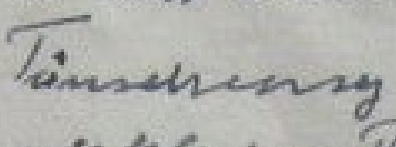
Etymologically the word delusion implies an action, a deceiving, referring here to that suffered by human beings through our consciousness, through which we perceive a deceptive appearance, the illusion of being "separated from the rest".
Although I believe that translations I have found are faithful to the originals, stripped of their context, quotations can lose much of their quality. Transliteration of punctuation, for instance, can result in an English that makes their authors sound coarse or uneducated; and 'grammatical transliterations' may substitute gender bias for the gender neutrality in an original.
Where I have edited translations it has been only in order to address issues of punctuation, prosody, and inference, that I found detracted from the content of the originals. The edits have been made with due diligence, and although I am not a professional translator or writer, I believe they are faithful, and required to make the fluency, erudition, and sensibility of the originals explicit — original texts are provided so readers may draw their own conclusions.
Footnote {delusion01a} of n_Einstein_Translation.php.
science
Science is an elementary practice. Scientism is a belief. Eugenics and the Holocaust it drove are among the brutal consequences and stark reminders of not recognizing this distinction.
Hormone, from the Greek, hormon, meaning 'that which sets in motion'.
from the Greek, akrasia, meaning 'loss of free will'.
frames
A FRAME refers here to a reference-frame; the perspective that a context gives to data that it describes or contextualizes. Any kind of LANGUAGE then is a FRAME for the data it refers to.
A CULTURE is a broader, environmental FRAME. It is a meta-LANGUAGE that enables meaning to be inferred from verbal and other languages that evolved with it, and which interprets the languages of other CULTURES that are used within it.
The following, for frames of reference, from the Random House Kernerman Webster's College Dictionary, aligns with that used here for FRAMES.
false friends
The accuracy of a translation is central to those who depend upon it, but although it is possible to translate, for instance, the complex procedures described by mathematical calculus into the elementary language of addition and subtraction, additional procedures of division and multiplication are required for accuracy. And the accurate translation of the infinitely more complex communications of human affairs, consistently proves to be an ever receding goal — one that effectively develops and reinforces interpersonal engagement.
While it may be possible to say anything in any LANGUAGE, doing so is not easy. Exact translations are generally only possible for the simplest of statements, and the more dissimilar the CULTURES of the languages involved, the more numerous, significant, and masked, false-friends of chance and semantics will be — as the meanings being referred to are first and foremost assumptions of belief.
CULTURES are at least as varied, as challenging to unravel, and perhaps as intransigent, as individual psychologies are. Their differences reflect the different histories of their peoples, families, and groups. Their languages have evolved to convey the meaning of those histories, of their trauma and privilege; to convey the wisdom, fears, and strategies their individuals have learned by experience; down across generations. Translations, because of this, above all are an an art more than a science.
from the Translators' Preface, of Tao Te Ching, by Lao Tzu. Translated by Stephen Addis and Stanley Lombardo, Hackett Publishing Company, 1993.
False-friends can emerge, or arise by chance. Chance false-friends are words whose appearance is the same or similar in two or more languages but which have different meanings. Semantic false-friends are those whose meaning have diverged over time and distance. Semantic false-friends can be can be either full or partial.
Partial semantic false-friends then, are fostered CULTURALLY rather than linguistically. They represent conscious divergences of belief, rather than accidents. These perhaps, carry the greatest risk of miscomprehension; and of this then snowballing.
An example of the miscomprehensions that readily arise from partial semantic false-friends, is provided by The Withdrawal Agreement that governed the procedures to be followed by European Union Member States and the United Kingdom in the implementation of the UK's withdrawal from the EU.
A key provision of this Agreement was the process to be followed for notifying affected residents of the Agreement's impact on them personally and of any steps they needed to follow to confirm the rights it had safeguarded for them in the country of their residence. The most significant element of this provision then, was that it required its signatories to take all reasonable steps to inform affected residents of changes to their status, and of the country specific procedures that these residents would then need to follow. This provision, in Finnish however, allowed the Finnish government to understand they were required simply to announce the changes through commonly used channels; e.g. by posts on the Government's Facebook page and in Finnish newspapers; and that they were not required, for instance, to notify affected residents by post, or to CC them the information it sent to their agencies notifying them of the changes it had made to their status.
...
The impact of this particular partial semantic false-friend may remind some of the Vogons, in the The Hitchhiker's Guide to the Galaxy by Douglas Adams, and of their communications with the people of Earth to notify them of the imminent demolition of their planet. .
The prefix "meta-" is used here as it is used in the term meta-language — a language used to describe or contextualize another language.
Language: a system of arbitrary signals, symbols or signs, used to communicate information.
Meaning: the sense or reference of an expression.
Semantic: of or relating to meaning.
to communicate: to convey information through a system of arbitrary signals.
to recognize: to know something as the same as, or belonging to the same class as, something known before.
from the poem The Stare's Nest by My Window, published in Meditations In Time Of Civil War (1922-23), by William Butler Yeats — on the Irish Civil War.
definition
corporatism
the organization of a state on a corporative basis. — Collins English Dictionary.
the principles, doctrine, or system of corporative organization of a political unit, as a city or state. [1885-90] corporatist. — Random House Kernerman Webster's College Dictionary.
the control of a state or organization by large interest groups; "individualism is in danger of being swamped by a kind of corporatism" — TFD Thesaurus, Based on WordNet 3.0, Farlex clipart collection.
corporative
of a state organized into and governed by corporations of individuals involved in any given profession, industry, etc. — Collins English Dictionary.
of or relating to a government or political system in which the principal economic functions, such as banking, industry, labor, and government, are organized as corporate entities. — American Heritage Dictionary.
of or pertaining to a political system under which the principal economic functions, as banking, industry, and labor, are organized as corporate entities. — Random House Kernerman Webster's College Dictionary.