
ϴ | incorporation |
meaning and expression
Environments consist of BEINGS as well as inanimate entities. On being heard, conversations between them begin, gathering together societies of mutual interest and dependency. Individuals find they get far more benefit from their actions in these than they do alone. Three or four billion years ago, soon after life on Earth began, this surplus, social capital, gave birth to a biosphere of social BEINGS that humans evolved as a part of.
Inside and around us, the sociality of virus, microbe, and animal, blended together and evolving, gives rise to what we come to know as 'us'. Only about half our cells are human. The rest are bacteria without which we struggle to survive. Our body is an environment of microscopic beings. And they appear dismissive of it. Just as we appear dismissive of ours.
Every being exists as an element of a social environment. From this elemental sociality, individual, multi-cellular life-forms evolved. Before we developed as groups of individuals, our own life-form evolved colonially, from extended families into tribes, nations, and empires. Although our technology sets us apart, essentially we are not so different to other species. Hunting, warring, reproducing and protecting young, are fundamentally social acts. Sport, music, and art, express and develop social cohesion. All are resourced from social capital and variously serve to produce it.
As individuals we evolved to die so that our species could evolve and survive. Before we can stand we fight to be free —it's something we'll line up and die for— yet deprived of connection we soon become frustrated, bored, and anxious.
As a society grows, its individuals become more dependent upon it and their roles increasingly specialize. Cohesion and growth are achieved through a shared cultural narrative, an identity that competes with others and reproduces in the perceptions and behaviours of individuals.
Born expecting to be understood, we have learned to see, to hear and feel, within the cultural environment that surrounds us. Consciously and unconsciously we develop our behaviours to be interpreted by those around us.
Our culture nurtures us as we grow. We find our sense of security and home inside the groups it defines. As it enfolds us in its stories, constructions, and customs, it manifests who we are, to others and to ourselves.
The environment of a BEING is a series of spaces that it knows from experience. It is constructed by perception as much as by physics and biology. Our perception develops through adapting to the culture that surrounds us in ontogeny. This frames our EXPERIENCE and informs our PERCEPTION of self and other. Darwin noticed that finches have adapted to their environments; but it is environments of inanimate and animate things that 'select' the BEINGS that survive. We shape our environment but we are shaped and survive as elements of it.
As we adapt, our CULTURES of family, tribe, and community grow nested within us like Russian dolls, informing our feelings, thoughts, and behaviours. Even when they contradict one another we absorb their narratives, reconciling and integrating them into our development. While The differences between the singular, personal cultures that result individuate us their commonalities facilitate communication and aggregate us into ever larger groups. Reproduction involves the transmission not only of biological codes but of CULTURAL ones. CULTURAL codes reproduce on being believed. Whether in their native societies or alien ones, these grow and evolve as individuals do by engaging and competing with others.
Individuals depend upon society. In a social crowd, as differences between them are unconsciously reconciled, their boundaries soften, and they merge. In a shared virtuality of symbols and signs, cultures hold societies together. Shepherding societies to wage war, or revolt, or labour and repress, a culture's narratives of belief and justice comfort, excite, and terrify. Responding to threats and opportunities they perceive, cultures develop and grow. With lifespans of hundreds or thousands of years they behave as individuals, changing their 'minds' and replacing their leaders.
8.1. As cultures evolve and develop increasingly complex strategies to exploit social capital, individuals take on increasingly specialized roles. in our cultures limited companies evolved to release social capital from the risks and responsibilities that constrain individuals. limited companies have rights as individuals do, to own property, enter into contracts, employ others, and sue for damages, but only limited responsibility. Conceived to drive our industry, limited companies were the first virtual beings, their artificial intelligence a simple algorithm of cupidity. Serviced by people they have grown; now they direct economies and nations. From handprints on cave walls to printing presses and HTML, for over 65,000 years virtuality has grown, while human brains have shrunk.
cultures secure their future by means of their historical narratives. Their unity, and their practices of justice, freedom, and charity, are founded upon an acceptance of the context of meaning this provides. Many narratives hold that recent human migrations were 'natural', but peoples were and continue to be dispossessed of their common land, variously evicted from their homes and stripped of their livelihoods, through ordered Acts of inclosure. Peoples have been forced to migrate to towns. There, religious charities, industrialists, and a new breed of landlord, rehoused extended families of the old world in ideal, nuclear-family homes. Societies infantilized after industrialization when families were rendered down further by the extermination of a generation of males in two world wars. scientism has replaced old religions; education now trains citizens for industry, and knowledge is translated into procedures. Social capital has been digitized and, in ever more finely segregated demographics, virtuality has bloomed.
Δ making sense ψ on being heard
All we have in common is the illusion of being together. And beyond the illusion of permitted anodyne there is only the collective desire to destroy isolation. Impersonal relationships are the no-man's land of isolation. By producing isolation, contemporary social organization signs its own death sentence.
Societies' cohesion and growth are achieved through a shared cultural narrative of thoughts and behaviours. Competing with others in the MINDS of their individuals, this replicates on being believed.
Do these insights still hold true, or is Generation Beta, colonialized by post-modern broadcasting systems, the first generation to become truly corporate?
Quotations from pp.24-25 of The revolution of everyday life ("Traite de savoir-vivre a l'usage des jeunes generations"), by Raoul Vaneigem, 1965, Gallimard 1967. Translation by John Fullerton and Paul Sieveking, 1972.
anodyne. anything that alleviates mental distress and pain.
.. another voice.
Progressing through cultural as well as physical adaptation, evolution is driven by what the next generation is learning. The framework of knowledge that nurtures this understanding is the culture of its society, and is more powerful, and of greater and more fundamental, long-term value than that which comes from direct application of the knowledge itself
The stanza is taken from the poem: 'Little Gidding', written by T.S Eliot during the air-raids on Great Britain in World War II.
Dissatisfied with each draft, and believing the problem was not with the poem but with himself, Eliot abandoned it, returning to finish it the following year. The concluding poem in a volume of four, it was published in 1943 as: 'Four Quartets'.
biophysicality
If we accept as unavoidabe that all descriptions of the ineffable are metaphorical; and if creationist and anthropocentric teleologies and their concepts of the soul are set aside; then, BEINGS can be defined as 'vehicles' of life and LIFE inferred recursively.
Rather than merely 'wet' physical entities, BEINGS are BIOPHYSICAL EXPRESSIONS, organized and animated by the interpretations their BIOSEMIOTIC systems make of their external and internal environments.
Any psychological construct requires a BIOPHYSICAL correlate in order to exist; every BIOPHYSICAL construct requires a psychological correlate in order to survive. In actuality then, psychology refers to the METABIOLOGICAL expression of a BEING.
PERCEPTIONS, attributes of BIOSEMIOTIC systems that in humans are considered as awareness, consciousness, EGO and mind, are generated from information that the SENSES of a BEING recognize in the NOUMENA which it encounters — in the same way as PERCEPTIONS of colour are.
wellness
In an individual, the development of wellness and illness is a function of the interaction between their BIOPHYSICAL actuality and their environment. It is this system as a whole that is impacted by any medical or psychological interventions, and any social support and care, that the individual receives or is privated of.
Research into cancer and other diseases has long since identified the existence and primacy of METABIOPHYSICAL systems, and the need to address these as a whole; however, despite the work of the WHO modern societies and their BROADCASTING systems appear obdurate, discounting 'holism' and instead promoting increasingly reductionist models.
MEANING, refers to that which a BEING PERCEIVES from the EXPRESSION of a NOUMENON. This then is inherited, encoded and developed through the FRAME of the individual's ONTOGENY. It is inevitable then that different FRAMES arise.
Those BEINGS that are less able to recognize and reconcile these different FRAMES are then at greater risk in social groups of being misinformed or deceived.
Ultimately, short term success is an insufficient guide for future action. Locusts are successful but find themselves unable to escape developing from peaceful co-existance, as individuals into cannibalistic war, as a swarm.
BIOSEMIOSIS is a recursive process, enabling BEINGS to generate MEANING by aligning their PERCEPTION of their current EXPERIENCE with what they can RECOGNIZE from the EXPERIENCES previously EMBODIED in themselves, or externally, by themselves or through inheritance. ENDOSEMIOSIS and EXOSEMIOSIS then refer, respectively, to the RECOGNITION of internal and external NOUMENA..
BIOSEMIOSIS is a recursive process, enabling BEINGS to generate MEANING by aligning their PERCEPTION of their current EXPERIENCE with what they can RECOGNIZE from the EXPERIENCES previously EMBODIED in themselves, or externally, by themselves or through inheritance. ENDOSEMIOSIS and EXOSEMIOSIS then refer, respectively, to the RECOGNITION of internal and external NOUMENA..
A metatransition is a metasystem transition to EITHER a more complex OR a simpler structure, ultimately leading to a transitory OR a permanent evolutionary transition in individuality.
Here, metasystem refers to a general, rather than to a restricted, controlling or organizational system which maintains the homeostasis necessary for the functioning of a system and its subsystems.
functioning, disability and health
First drafted by the WHO in 1980, the International Classification of Functioning (the International Classification of Functioning, Disability and Health), is an holistic overview of wellness and illness. Despite its publication, and the fact that today biopsychosocial models are taught in medical schools, the significance and impact on social organization and its institutions of these models might appear to citizens to have been relatively minimal — perhaps because of the powerful lobbies that work to promote a fundamentalist belief in scientific reductionism.
The article, from which the quote was taken, although apparently accessible in 2024, has now been taken down by Stanford Medicine. The new article (at Stanford research builds link between sleep, cancer progression) still refers to Spiegal's work, but the expurgated quote there now, intentionally or otherwise, seems to downplay the research and to distance Stanford from Spiegal and the view he expressed.
life
Life is the state of being.
Being is the condition of BEINGS.
A BEING is descended from a BEING.
I am a BEING.
It is as correct or incorrect to say that hormones create love as it is to say that love creates hormones. Love is not definable in the way that hormones are; they are terms in different reference frames.
Noumenon, is a Greek word meaning "that which is perceived". It is the word Kant used to identify the thing-in-itself, the underlying reality that is then recognized by an observer as a SIGN.
Kant referred to recognition of the thing-in-itself as perception. Here however, PERCEPTION is used to label one of the four stages in the process of BIOSEMIOSIS that is bootstrapped by RECOGNITION.
Ruppert, Edward E.; Fox, Richard, S.; Barnes, Robert D. (2004). Invertebrate Zoology, 7th edition. Cengage Learning. pp. 148-174; cited in Jellyfish, Taxonomy (list item: Staurozoa), Wikipedia..
Fautin, Daphne G. and Sandra L. Romano. 1997. Cnidaria. Sea anemones, corals, jellyfish, sea pens, hydra. Version 24 April 1997. http://tolweb.org/Cnidaria/2461/1997.04.24 in The Tree of Life Web Project, http://tolweb.org/.
footnotes of n_Einstein_Translation.php included in entryNote.php, e_Einstein_HumanDelusion.php, and e_personalMeta.php.
Einstein wrote the above (bold emphasis added), in ink, in a note now held in the Albert Einstein Archives, Jerusalem. The edit I have made is of the translation, written in another hand, that appears underneath them.
There were several reasons for editing that translation — to reflect the gender neutrality of the German more consistently; to echo Einstein's use of the words, delusion, and, illusion; and to better reflect the certitude of the note's opening argument, carried in the brevity of the German yet somehow absent in the translation on the note itself. In the end, the edit below, supported by translations by Google on 6 March 2024, is only a minor edit of it:
The translation, in pencil on the original note, became the text of the condolence letter sent from Einstein to Dr. Marcus on 12 February 1950. The first two sentences of it were then used to open the letter of condolence sent on the 4 March 1950 to Norman Salt.
delusions and illusions
Einstein spoke the refined German of the Bildungsbürgertum, a language characterized by its precision. It might the be reasonable to assume, as an inspection of Einstein's note also suggests, that his use of the word Täuschung (delusion) twice and Illusion once, was considered not careless.
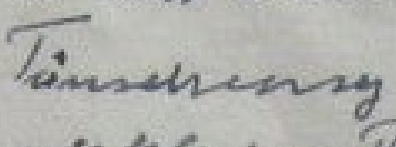
Etymologically the word delusion implies an action, a deceiving, referring here to that suffered by human beings through our consciousness, through which we perceive a deceptive appearance, the illusion of being "separated from the rest".
Although I believe that translations I have found are faithful to the originals, stripped of their context, quotations can lose much of their quality. Transliteration of punctuation, for instance, can result in an English that makes their authors sound coarse or uneducated; and 'grammatical transliterations' may substitute gender bias for the gender neutrality in an original.
Where I have edited translations it has been only in order to address issues of punctuation, prosody, and inference, that I found detracted from the content of the originals. The edits have been made with due diligence, and although I am not a professional translator or writer, I believe they are faithful, and required to make the fluency, erudition, and sensibility of the originals explicit — original texts are provided so readers may draw their own conclusions.
Footnote {delusion01a} of n_Einstein_Translation.php.
science
Science is an elementary practice. Scientism is a belief. Eugenics and the Holocaust it drove are among the brutal consequences and stark reminders of not recognizing this distinction.
Hormone, from the Greek, hormon, meaning 'that which sets in motion'.
from the Greek, akrasia, meaning 'loss of free will'.
frames
A FRAME refers here to a reference-frame; the perspective that a context gives to data that it describes or contextualizes. Any kind of LANGUAGE then is a FRAME for the data it refers to.
A CULTURE is a broader, environmental FRAME. It is a meta-LANGUAGE that enables meaning to be inferred from verbal and other languages that evolved with it, and which interprets the languages of other CULTURES that are used within it.
The following, for frames of reference, from the Random House Kernerman Webster's College Dictionary, aligns with that used here for FRAMES.
false friends
The accuracy of a translation is central to those who depend upon it, but although it is possible to translate, for instance, the complex procedures described by mathematical calculus into the elementary language of addition and subtraction, additional procedures of division and multiplication are required for accuracy. And the accurate translation of the infinitely more complex communications of human affairs, consistently proves to be an ever receding goal — one that effectively develops and reinforces interpersonal engagement.
While it may be possible to say anything in any LANGUAGE, doing so is not easy. Exact translations are generally only possible for the simplest of statements, and the more dissimilar the CULTURES of the languages involved, the more numerous, significant, and masked, false-friends of chance and semantics will be — as the meanings being referred to are first and foremost assumptions of belief.
CULTURES are at least as varied, as challenging to unravel, and perhaps as intransigent, as individual psychologies are. Their differences reflect the different histories of their peoples, families, and groups. Their languages have evolved to convey the meaning of those histories, of their trauma and privilege; to convey the wisdom, fears, and strategies their individuals have learned by experience; down across generations. Translations, because of this, above all are an an art more than a science.
from the Translators' Preface, of Tao Te Ching, by Lao Tzu. Translated by Stephen Addis and Stanley Lombardo, Hackett Publishing Company, 1993.
False-friends can emerge, or arise by chance. Chance false-friends are words whose appearance is the same or similar in two or more languages but which have different meanings. Semantic false-friends are those whose meaning have diverged over time and distance. Semantic false-friends can be can be either full or partial.
Partial semantic false-friends then, are fostered CULTURALLY rather than linguistically. They represent conscious divergences of belief, rather than accidents. These perhaps, carry the greatest risk of miscomprehension; and of this then snowballing.
An example of the miscomprehensions that readily arise from partial semantic false-friends, is provided by The Withdrawal Agreement that governed the procedures to be followed by European Union Member States and the United Kingdom in the implementation of the UK's withdrawal from the EU.
A key provision of this Agreement was the process to be followed for notifying affected residents of the Agreement's impact on them personally and of any steps they needed to follow to confirm the rights it had safeguarded for them in the country of their residence. The most significant element of this provision then, was that it required its signatories to take all reasonable steps to inform affected residents of changes to their status, and of the country specific procedures that these residents would then need to follow. This provision, in Finnish however, allowed the Finnish government to understand they were required simply to announce the changes through commonly used channels; e.g. by posts on the Government's Facebook page and in Finnish newspapers; and that they were not required, for instance, to notify affected residents by post, or to CC them the information it sent to their agencies notifying them of the changes it had made to their status.
...
The impact of this particular partial semantic false-friend may remind some of the Vogons, in the The Hitchhiker's Guide to the Galaxy by Douglas Adams, and of their communications with the people of Earth to notify them of the imminent demolition of their planet. .
The prefix "meta-" is used here as it is used in the term meta-language — a language used to describe or contextualize another language.
Language: a system of arbitrary signals, symbols or signs, used to communicate information.
Meaning: the sense or reference of an expression.
Semantic: of or relating to meaning.
to communicate: to convey information through a system of arbitrary signals.
to recognize: to know something as the same as, or belonging to the same class as, something known before.
from the poem The Stare's Nest by My Window, published in Meditations In Time Of Civil War (1922-23), by William Butler Yeats — on the Irish Civil War.
definition
corporatism
the organization of a state on a corporative basis. — Collins English Dictionary.
the principles, doctrine, or system of corporative organization of a political unit, as a city or state. [1885-90] corporatist. — Random House Kernerman Webster's College Dictionary.
the control of a state or organization by large interest groups; "individualism is in danger of being swamped by a kind of corporatism" — TFD Thesaurus, Based on WordNet 3.0, Farlex clipart collection.
corporative
of a state organized into and governed by corporations of individuals involved in any given profession, industry, etc. — Collins English Dictionary.
of or relating to a government or political system in which the principal economic functions, such as banking, industry, labor, and government, are organized as corporate entities. — American Heritage Dictionary.
of or pertaining to a political system under which the principal economic functions, as banking, industry, and labor, are organized as corporate entities. — Random House Kernerman Webster's College Dictionary.